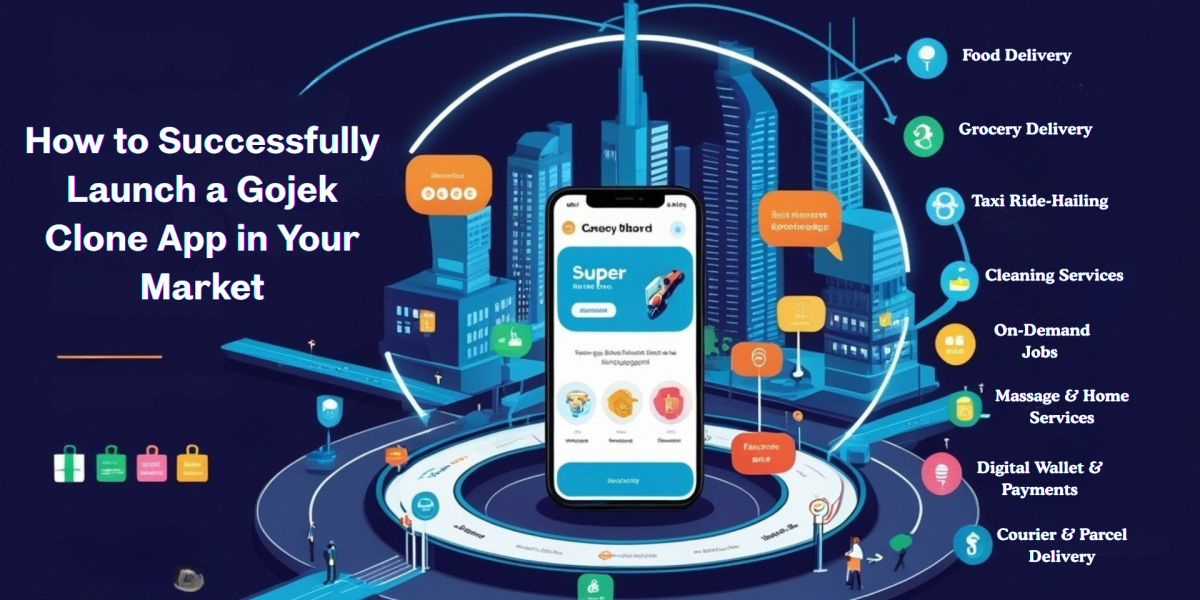
On-Demand App-Tricorns: On this side of the hustle, with apps like Uber for X and Gojek Clone on the rise against fast changes in the dynamics. In today’s competitive digital world, introducing a super app like Gojek to your market gives entrepreneurs an immense advantage due to the rising demand for multi-service platforms. Gojek has proven itself in Southeast Asia, and there are just as many firms keen to follow this path to success in their local markets. But replicating existing capabilities is not enough for a successful launch; it needs to know the target audience, provide something new and different, and have a good go-to-market strategy. In this post, we’ll walk through the steps you need to take—from market research, product development and engineering, legal requirements, and launch plans—to ensure your on-demand venture in an established and competitive marketplace doesn’t just survive, but thrives.
Understanding the Gojek Clone Concept
What is a Gojek Clone App?
A Gojek clone app is essentially a multi-service app through which you can offer a range of on-demand services to your clients within a single application. If we think of it as our own personal Swiss Army knife, what we’re cutting through isn’t quite the sausage you might find in your pocket toolkit, but stations and checkered zones signaling to us (stop here) all manner of ideas and a range of things from transport to food delivery—an abundance of different services at our disposal. These clones, named after Indonesia’s popular ride-hailing giant Gojek, want to mimic its successful model—one that brings ease of life to consumers and offers convenience in abundance.
Key Features of Gojek Clone Apps
Gojek Clone Apps—The Technical Magic. While we already discussed the importance of some unique features. Are you geared up for the buffet of features? The main features comprise ride hailing, food delivery, courier service, payment gateway, and real-time tracking and monitoring of users themselves, giving you interactive ratings & an admin panel for effective management. The point is to make what’s essentially a seamless customer experience—and for people to jump between them as easily as they’d decide on their favorite Netflix shows.
Market Trends and Demand Analysis
User demand is increasingly for multi-service apps — people want everything in one place, after all, why would you drive four different fucking apps when you can put it into one? Users want more convenience , and they are starting to look for solutions from the likes of you, creating a brand new range of opportunities to ride on if you have a responsive solution ready, like your clone app, turning out support for eco-friendly transportation or sourcing local food drives users’ attention right up. And due to the surge in mobile app usage during and post-pandemic, this trend is being supercharged!
Market Research and Analysis
Identifying Target Audience
Knowing your economic status is important for the success of your Gojek Clone App. Are you serving urban professionals who are pressed for time and want everything now, or are you going after urban families in need of budget-friendly transportation? Learning who your users are will guide how you shape your marketing strategies and service offerings to fit (just like a bespoke suit, except for apps).
Competitor Analysis
Before you dive in headfirst, see what other players are up to in your marketplace. Competitor analysis: You need to know what you’re up against and why these bridges are burning. Is their experience of the app consistent with your product vision? This can help you identify your chances to differentiate yourself — perhaps by offering better pricing, distinctive services or a user-friendly interface. Because keeping your eye on the competition is basically necessary, it's also wise to "keep your friends close as well as your enemies."
Understanding Local Regulations
Local regulations are like peeling an onion — there’s always another layer. Regulations for ride-sharing, food delivery and data privacy can differ dramatically from place to place. Be sure you fully understand the licensing, insurance and any other legal hoops you’re going to be required to jump through. Check your local rules to avoid any legal curveballs, since no one needs the cops showing up just as they are getting off the ground!
Defining Your Unique Selling Proposition (USP)
Identifying Gaps in the Market
Find those little holes in the market where customers are screaming, “Hey I want this!” Maybe there are no cost-effective delivery options in your neighborhood, or maybe no one is prioritizing an eco-friendly process. The trick is to identify the narrow niche that hasn’t been drilled out, and make it your unique selling proposition (USP). It’s you saying, “I see you — and I have exactly what you’re looking for.”
Creating a Value Proposition
Your value proposition is your opportunity to glisten brighter than a diamond in a thrift shop. It is how you make your customers know why they should buy your Gojek Clone App as opposed to other Apps. Be transparent about what makes you different — be it stellar customer service, special features or local partnerships. This messaging must reflect well for your ideal customer and as if they have just struck gold!
Tailoring Services to Local Needs
Customization is key! What works in one place may flop in another, like a fish attempting to mount a bicycle. Learn about local preferences and culture to modify your service line. Perhaps your neighborhood is addicted to late-night snack deliveries or daytime car services for the school run. Whatever it is, make sure your app reflects and serves the local users you aim to attract.
Key Features to Include in Your App
Essential User Features
Your app’s user experience can make or break you. Key feature set should comprise a user-friendly interface, smooth booking process, real-time tracking, and user reviews. A good in-app chat feature could also improve communication between app users and service providers. Consider it a friendly makeover for your app — and who wouldn’t like that?
Admin Dashboard Functionalities
Every successful Gojek Clone App is powered by an admin dashboard that makes the job of managing it a walk in the park. Add functions such as live analytics, service provider management, monetary tracking, and customer support facilities. This is your “mission control”, so you need to stock it with everything essential for tracking output and keeping operations running smoothly without a staff meltdown.
Payment Gateway Integration
Nothing says convenience like an effortless payment process: users are hooked! Add several payment gateway options for different user choices: You need to think of the users who don’t have – or who simply won’t use – Visa cards and so won't mind using mobile wallets, say. Speed, security for payment experience: Not only does the convenient and rapid payment method improve user experience, but it also helps to build trust. Because let’s face it, nobody wants to feel like they’re sending their hard-earned all the way to Timbuktu!
Selecting the Right Technology Stack
Choosing Between Native and Hybrid Applications
The eternal dilemma of native vs hybrid apps surfaces when you talk about building your Gojek clone app. Built-for-purpose apps developed for one platform (for example, iOS or Android) are great because they offer better performance and a uniform user experience, as well as harnessing the full power of the device. But they are pricier and take longer to develop. Hybrid apps, which combine web technologies with native ones, on the other hand, may be less expensive and faster to launch, but feel a bit sluggish and rough around the edges. So ask yourself: Do you want to really shell out the dough for that extra snazzy experience, or are you all right with a little lag in exchange for some savings?
Backend Technologies to Consider
Now that you’ve selected your front-end style, we can move on to the behind-the-scenes drama — backend technologies. Popular choices include Node. js for its fashionable non-blocking I/O, making your app feel snappy. If you want something more traditional, Ruby on Rails is shining because of its fast development. And let’s not overlook the trustworthy databases such as PostgreSQL or MongoDB that will house all those user rides, payments, and snack requests. Choose the right one because the backend is like the drummer of your rock band.
Scalability and Performance Factors
You can imagine it: you launch your app, it’s a smash, and users flock to it like bees. But wait! Is your technology stack ready for the stampede? Scalability is key. Find cloud services like AWS or Google Cloud that will allow you to handle high traffic without your app crashing and burning out like a terrible reality TV contestant. Performance is second: I mean, no one likes to wait—especially when you need a ride. Streamlining your code and caching where you can, get those server response times as fast as a squirrel on energy drinks.
Development Process and Timeline
Planning and Prototyping
Now, before you open your text editor and start coding your brains out, you need to take a step back for a minute and start sketching. Planning and prototyping work to clarify your app’s functionality, as well as user flow. Create designs that will make them sing with joy in tools like Figma or Sketch. Spend your time here, because a fail-safe plan today is tomorrow’s smoother, less chaotic lift-off.
Agile Methodology in Development
Pull out the ninja in you with Agile methodology—a process for building your app that’s all about being flexible and adaptive. You can make your team nimble and agile by splitting up your project into small sprints, addressing items gradually. And it accommodates ongoing feedback and adjustments, which means you can turn on a dime quicker than a dancer on one of those dance shows if you need to. It’s about being flexible, and not getting too wedded to ideas that wind up going nowhere.
Testing and Quality Assurance
This is then followed by phases of testing and QA, which are all too often overlooked. Consider this a spa day for your app before sending it out into the world. You'd better run those tests like a marathon! Functionality tests, usability tests, or load tests – you need them all so that when users come pouring in, your app runs effortlessly. And, don’t let us overlook beta testing/delta testing actual users to receive feedback — like taking the time to hear what your audience wants and needs.
Effectual Marketing Strategies for Launch
Building Anticipation: Pre-Launch Campaigns
The launch of your product is as essential as a strong start to the week. Begin teasing your app with some pre-launch campaigns; building up to something great is on the horizon. Leverage countdowns, sneak peeks, or early sign-up benefits so users can’t wait to get going. It’s the App equivalent of a movie trailer. We want to leave them wanting more!
Leveraging Social Media and Influencers
Well, in the world of today, it is social media that’s your best friend — or at least your most gossipy companion. Show off what your app can do on social platforms such as Instagram, Facebook, and TikTok. Partner with influencers who have the soul of your brand and to reach their audience. Take it from us — an influencer with a well-timed post can take your app from zero to hero in the time it takes you to say “download now!”
Utilizing Local Advertising and Promotions
Digital marketing is a necessity, but don’t understate the value of traditional local advertising. When combined with print ads, flyers distributed locally, and attending local events, you’ll begin to create awareness in your community. Never undervalue the power of a discount for early adopters! It’s like hosting a party and offering the guests an incentive to come — everybody loves an added bonus.
Post-Launch Support and Updates
Monitoring User Feedback and Analytics
Now that the app is launched and the world is live with excitement. Now it’s time to pop the popcorn and watch the fireworks, yes? Wrong! You’ll want to keep an eye on user feedback and analytics. Leverage tools like Google Analytics to monitor user engagement patterns and determine which features are resonating — and which may require a touch of TLC. Encourage reviews often – after all, they’re the lifeblood of your app’s growth and you want to hear if there’s something working.
Regular Updates and Feature Improvement
Your app needs the kind of routine update that keeps your favorite TV show fresh and compelling. Release new features according to user requests and trends, but don’t be the show that never ends – become strategic about your updates. Watch the competition, and make sure your app develops along with user standards.
Customer Support and Community Engagement
Finally, remember your customers! Top-level customer support and engaging with your community can often turn relaxed users into fans.You might be able to reduce the number of requests by adding a support portal or FAQs so users can solve their issues without contacting you. But also have your team prepared to step in and help when things go south. Harnessing a community around your app can even lead to a committed and advocate user base that will defend your brand for ages after launch day is but a distant memory. Knowing your market, penetrating a unique niche, and executing clear strategies will make sure your app flourishes in the most competitive environment. Remember, persistent support and flexibility are paramount to keep the members happy and returning time and again! With focus and a strong base, your Gojek Clone App is unstoppable and is likely to grow into a preferred platform amongst a particular set of people.
FAQs
What Is An App Like Gojek Development Cost?
The price to build a Gojek clone app can greatly differ, depending on the features, technology stack, and development team location. It typically runs from a few thousand to tens of thousands of dollars.
Should I do some market research before I make the app live?
You don't need to -- but doing market research is extremely important when you are launching an app, so that you can understand your target audience better, see who the competition is, and what opportunities might exist in your local market. This would also help, as it defines if a real need for the app exists.
How do I market my Gojek clone app in the best way after launching?
The best ways to promote your app can include using social media, local influencers, specific ad campaigns, and some type of promotion or referral program in order to both attract and keep users.