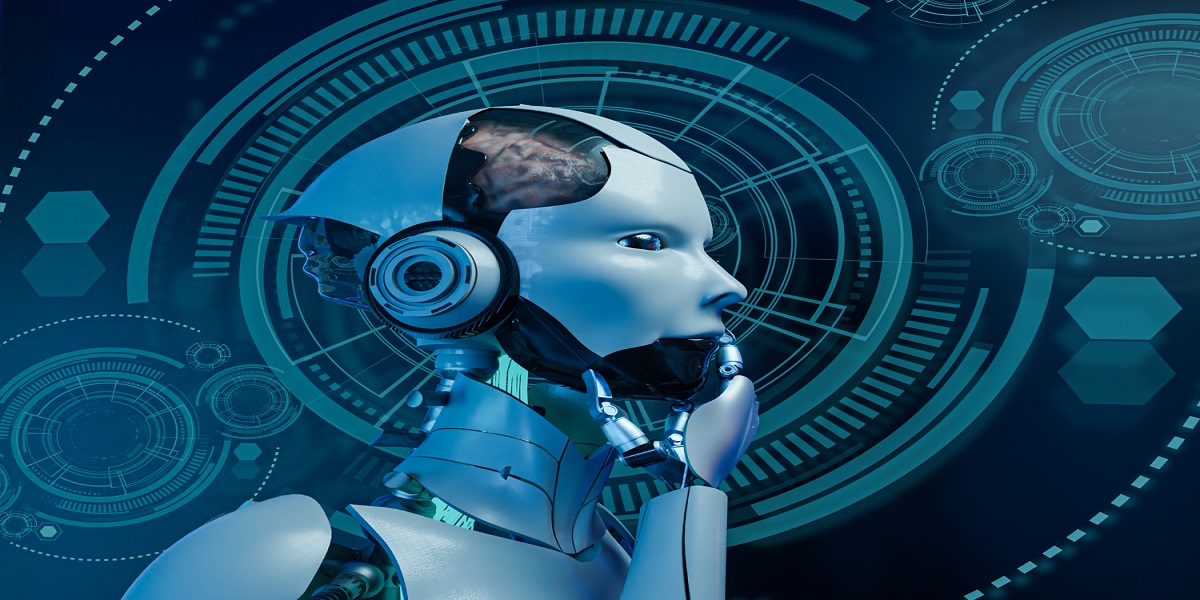
Artificial Intelligence refers to the human intelligence simulation that makes a machine think and rationalise just like a human. John McCarthy came up with the term Artificial Intelligence or AI in 1950.
As technology has evolved in recent years, the idea of AI has become more and more involved in medical applications, chatbot assistance, digital assistants, accurate decision-making, and so on.
With the implementation of Artificial Intelligence, a computer program can learn and think just as a human mind perceives. Learning, perception, and reasoning are 3 keys to optimise a machine’s AI behaviours. The application of AI is undeniable in complex tasks and subjects to Mathematics, Computer Science, Space Science, Psychology, Linguistics, and more.
However, anything excessive might turn out to be harmful, and we think that Artificial Intelligence is no exception.
Let’s go through the pros and cons of AI to understand its relevance.
What are the Perks of Artificial Intelligence?
Artificial Intelligence can replicate human thinking thanks to its learning capabilities and pattern recognition algorithms. Sometimes, it can become hard to decide for humans due to emotional factors, whereas AI can make a precise decision.
Additionally, Machine Learning and Deep Learning are 2 core subjects of AI.
According to the experts associated with Data Recovery Dubai, Artificial Intelligence programs are capable of analysing past data and improving their efficiency and performance without any help from humans. That’s why Artificial Intelligence can help solve a problem that puzzles human minds.
Here are some noted advantages of AI so far:
Eradicates the chances of Human Error
“To err is human” - We all know this phrase and admit that humans can repeat their mistakes. With Artificial Intelligence programs, the machine will be programmed with a large set of previously analysed data. Moreover, Artificial Intelligence uses specific algorithms after analysing data stored earlier.
Fewer mistakes have been reported in projects accompanied by artificial Intelligence. On the other hand, the precision and accuracy rates are incredibly higher for AI programs.
It’s proven that AI can handle complex tasks and calculations without any significant errors. For example, AI-powered weather forecasting applications offer more accurate data.
Bridges Humans to Technology for Daily Tasks
Nowadays, you can request a voice service to open your emails or work as a home intercom. Be it Apple’s Siri, Amazon’s Alexa, Google Maps, Cortana, or OK Google, all of them are full of AI applications.
You can talk your way out while communicating with these smart applications connected to the internet. Opt for hands-free operation with AI-based applications for a smooth and flawless experience.
Replaces Humans where Risks are Higher
Defusing a bomb, mining for oil or coal, exploring the deepest ocean trenches, etc., can be risky for human lives. Fortunately, it’s possible to replace humans with AI robots that can tackle such life-threatening situations without a human interface.
As an example, you can take Ukraine’s Chornobyl nuclear power plant explosion into account. No AI robot could minimise the radiation effect by putting out the fire in the early stages. Humans had to take the risk and pour boron and sand into controlling the fire and the radiation. No doubt, AI robots will be more helpful in these situations.
Offers Refreshments to Human Beings
How long can a human work without getting tired? On average, a human being is capable of working up to 6 hours without any break. Therefore, humans require a time-out, but it’s not necessary for Artificial Intelligence machines.
They can work 24X7 and don’t need any breaks. Additionally, AI machines don’t get bored or tired, unlike humans. Meanwhile, humans get the perfect balance between their professional and personal life where AI-based machines can work.
For instance, helpline centres and educational institutes deploy AI-based programs to handle issues and queries. Moreover, AI can minimise the burden of repetitive jobs. Be it sending the same email to loyal customers or explaining a definite loan procedure can get easy with Artificial Intelligence.
Provides Faster and Correct Decisions
Humans analyse different factors to reach a conclusion or decision daily. With Artificial Intelligence, you can get faster and more appropriate results. Based on the programs and data sets, Artificial Intelligence machines can generate faster outcomes.
As an example, you can have a look at any online Chess game or any other game where the computer acts as your opponent. With the hard mode on, it’s almost impossible to defeat the machine in the game. It masters all the possible algorithms by observing your patterns to get a clear win in a very short period.
Paves the way for New Innovations
Artificial Intelligence has become one of the most dominating powers in every possible sector. For example, it’s possible to predict and treat breast cancer among women with improved AI metrics.
Undoubtedly, Artificial Intelligence can process pattern recognition, big data, and other leading technologies. Extracting data and leading machines to reap combined information gets easier with AI programs. Therefore, AI is a must-have for any trending invention and innovation.
Threats Related to Artificial Intelligence
Hard to believe, but Artificial Intelligence has a few disadvantages. Let’s review them to understand where to draw the line:
Makes Human Lazy
Artificial Intelligence can drive tremendous advancements in the digital assistant industry. As a result, humans are more likely to become dependent on automation and digital assistants. For example, humans will rely on technologies for remembering numbers, addresses, etc. or executing simple calculations.
This can affect human productivity, and they can become lazier than ever. On top of that, future generations will suffer from this impact. They will need help with normal day-to-day activities that need analysis and memorisation.
Costs a Fortune to Implement
The deployment of Artificial Intelligence is not as easy as it sounds. For initial conditions, companies or institutes must invest a lot of money in AI frameworks, hardware, and software.
Moreover, training on learning capabilities and utilising AI machines makes the implementation more expensive. After all, the maintenance of Artificial Intelligence tools can be lavish.
Can Create Unemployment
As you have noticed, AI can replace the traditional workload or repetitive tasks with robots and more. Thus, human interference can be less, and it will bring a negative impact on employment and livelihood.
Almost every organisation looks forward to replacing human labour with more accurate AI robots and machines. Additionally, AI machines are capable of working 24X7 and save organisations money in the long run.
Delivers Decisions with No String Attached to Emotion
It’s not a secret anymore, AI robots and machines can make decisions faster, but they work on the data provided. However, they can’t replace humans in terms of decisions. After all, humans prioritise emotional factors to reach a decision.
Conversely, machines can’t think like a blood-and-flesh brain connecting to human emotions. We are doubtful whether machines can create an emotional bond with humans to decide on different aspects, such as sales, marketing, team management and more.
Can’t Think Unconventionally
AI machines are more likely to operate and analyse the provided data sets. They are designed to stay inside the box by applying definite algorithms and given examples. For instance, AI programs can need more creativity in the content marketing industry.
On the other hand, Artificial Intelligence can improve from experience, learning, and inputs over time. However, it’s difficult for them to approach the subject with the expected creativity or develop unique solutions.
What are the Advantages and Downsides of Implementing Artificial Intelligence in the Healthcare Industry?
Artificial Intelligence has streamlined the tedious and time-intensive tasks related to healthcare. It simplifies complicated procedures and helps medical professionals to make real-time decisions. Large IT firms are investing more in AI for healthcare research.
Advantages of Artificial Intelligence (AI) in Healthcare:
Currently, 45% of healthcare centres worldwide use AI for technological advancement. It can be assumed that this number will increase in the coming years. Moreover, AI-powered medical tools play a pivotal role in the medical industry.
Here are the reasons why the healthcare industry is adopting AI:
Makes Healthcare More Accessible
Obtaining appropriate and on-time medical assistance is difficult for people who reside in remote areas - AI can only solve this problem. Artificial Intelligence can be used to develop more efficient healthcare centres in such places.
Patients will be able to better understand the symptoms or causes behind the diseases with AI. Besides, they will receive the required treatment without stepping outside their house.
Many AI-based applications have been lately designed for healthcare institutions to provide immediate support to patients. You must have heard about the Ada app, right? It uses AI technology to offer medical guidance to people in rural countries. This healthcare app is available in 140 countries including Uganda and Tanzania.
Offers Real-Time Medical Data
Acquiring reliable and accurate information is important to diagnose or treat critical medical problems. It often becomes difficult to get the correct data with traditional tools. Thus, doctors and other medical representatives use AI to access real-time data.
It also speeds up the data analysis process and helps patients save costly expenses. Moreover, you can now get health data via mobile devices. All you need to do is install the medical app on your smartphone. Connect with a licensed healthcare expert and get individualised private care through video chat or messaging.
Saves Time and Money
It takes an ample amount of time to identify patients’ illnesses with age-old medical tools. Thus, many medical facilities now use AI for faster medical diagnosis. This technology is helping doctors to detect life-threatening conditions in their early stages. So, AI is saving time and a person’s life as well.
It is important to mention that the healthcare industry wastes an average of $200 billion per year. Administrative tasks such as filing can cost a lot of money. However, medical centres can save costly expenses with DL and NLP algorithms.
Reduces a Physician’s Anxiety & Stress
Nearly 50% of primary care physicians experience more burn-outs and anxiety than other medical professionals for strict deadlines. However, they can reduce the stress burden and anxiety with Artificial Intelligence.
AI automates the diagnosis process and also allows physicians to share medical data quickly. It also makes complex organisational operations easier, relieving the medical personnel’s stress. For instance, AI can explain the cause of the illness to patients and save them from potential hazards.
Drawbacks of Artificial Intelligence (AI) in the Healthcare Industry:
Despite all these benefits, AI has some major downsides that you must be aware of. Here are the reasons why most healthcare institutions avoid using this technology:
Requires Human Supervision
Well, AI has come a long way in the medical industry, yet it depends on human supervision. For instance, surgery robots fail to provide rational medical solutions at times. Thus, you might need a medical professional’s assistance for health improvements.
To be precise, AI requires human assessment even though it uses machine learning. So, a healthcare practitioner should be your first choice to acquire meaningful insights for your medical problems instead of AI-based apps.
Lacks Personal Involvement
Surgery robots aren’t programmed to communicate with patients. It is considered a downside by some healthcare specialists. Human capabilities in terms of social interaction with patients are considered to be more effective than computers.
Establishing trust is important between a medical representative and a patient to get treatment. AI-powered equipment obviously can’t build trust. Unlike computers, primary healthcare physicians can break rules to save a patient’s life.
Overlooks Social and Economic Variables
Doctors provide appropriate medical recommendations for specific patients based on their financial condition. However, an AI-based app assigns patients medical treatments based on in-depth diagnosis. It doesn’t take their financial constraints or other preferences into consideration.
Moreover, an AI system creates data privacy concerns. Renowned companies like Amazon use AI but have complete control over data collection. However, medical institutions encounter problems when sharing data on mobile devices. So, many healthcare firms are choosing traditional tools over AI.
Vulnerable to Security Risks
AI-enabled devices are susceptible to security risks - because they rely on data networks to function properly. Online predators can easily access confidential consumer data from an AI-based app. So, avoid malicious threats by not using these smart apps in your healthcare centre.
Bottom Line
With Artificial Intelligence, it’s challenging to implement morality and ethics in different systems. Whereas humans can tackle morality and ethics more efficiently. The approach in such a type of behavioural AI is still on paper and might take longer to be incorporated.
Undeniably, Artificial Intelligence has enough potential to make enough changes to human civilisation. Some experts have even feared that the rise of Artificial Intelligence and its robots can harm humanity if there is no control over them.