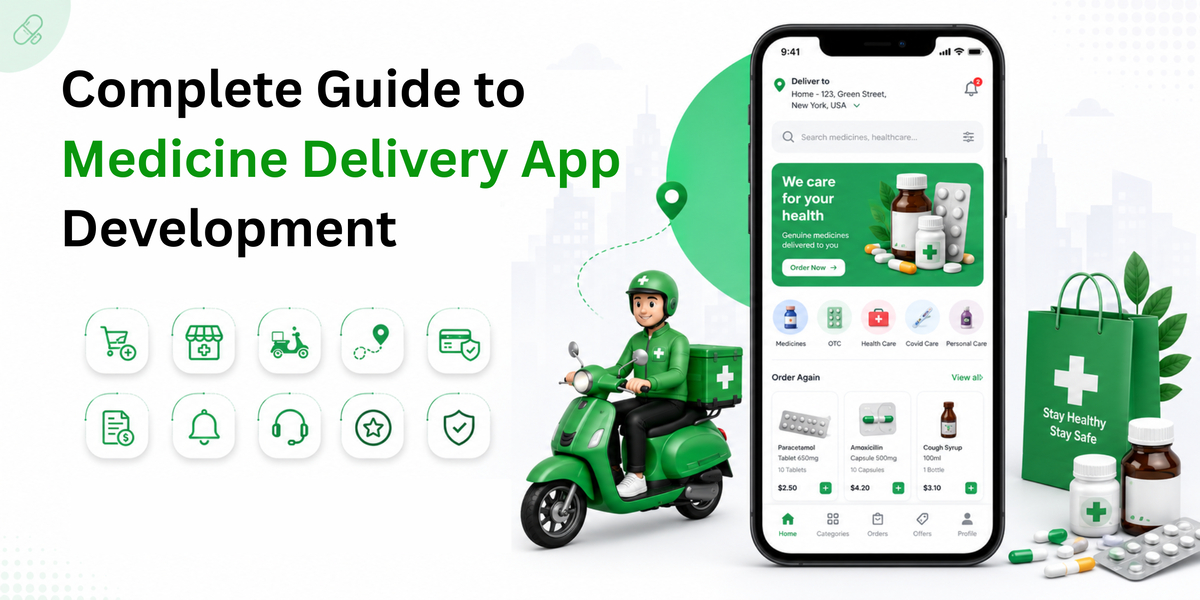
In the current years, the demand for treatment delivery apps has increased, driven with the help of the need for comfort and accessibility in healthcare. As busy lives and a focus on patient-centered care continue to shape the company, these packages have pivoted to vital equipment to facilitate the instant delivery of medications to shoppers.
This entire medical drug app improvement guide will explore the complexities of creating a powerful and User Interface Design, from understanding the market landscape and identifying key features to navigating legal considerations and implementing successful advertising strategies.
Whether you are a startup looking to dive into the market or a long-term business aiming to beautify your transportation services, this guide will provide precious insights and practical steps to help you be victorious inside the evolving international drug shipping industry.
Understanding the Medicine Delivery App Market
Current Market Trends
The market for medicine delivery apps is experiencing a revolution, with telehealth, e-pharmacy, and on-demand delivery becoming the holy trinity of healthcare. Businesses looking to capitalize on this growing trend often work with Top Mobile App Development Companies in USA to create secure, user-friendly, and scalable applications that connect patients with pharmacies and healthcare providers.
Consumers are increasingly favoring convenience, leading to a rise in mobile healthcare services. With the pandemic accelerating digital adoption, people are now more accustomed than ever to ordering medicines through their phones instead of making a trip to a physical pharmacy.
It's a brave new world where your prescription can arrive faster than your takeout.
Target Audience Analysis
When it comes to treatment delivery, knowledge of your target market is paramount.
Primary customers range from busy professionals and seniors who rely on scientific drugs every day to parents who need to keep their kids safe with cough syrup.
Age, lifestyle, and health conditions play a role in shaping your target market. Creating targeted ads and advertising and marketing techniques and personalization opportunities based entirely on the segments will help you reach their specific wants.
Competitor Landscape
The treatment delivery app landscape is getting crowded. From established players like CVS and Walgreens to niche startups, competition is fierce.
Identify their strengths and weaknesses – who got the slickest app design? Which is the fastest to deliver?
Choose a very unique angle or feature that sets your app apart. No one wants to be another fish in the huge and chaotic sea of cellular health plans.
Key Features of a Medicine Delivery App
User Registration and Profiles
The first impression counts, and a continued sign-up process is the crimson carpet of your app.
Allow users to create profiles where they can store prescriptions, add scientific records, or even get tailored health indications.
Think of it as a virtual pharmacist who remembers the whole lot but additionally never judges your snack choices.
Medicine Catalog and Search Functionality
The core of your app is the drug catalog—this is where the magic happens.
A person-friendly interface that allows customers to browse or search for medications could make an international difference.
Think filters and categories that make even a librarian proud while providing crucial records like dosage, facet effects, and availability at a glance.
Order Management System
Once a user has decided to increase an order, the method should be as easy as a well-oiled pharmacy.
Order catalogs, reputation monitoring, and a cart that is smooth to navigate will keep your customers happy.
Bonus factors for allowing customers to set refill reminders—no person wants to miss their medication just because they forgot.
Payment Gateway Integration
In the era of virtual wallets and tap-to-pay structures, having a reliable price gate is non-negotiable.
Consumers should feel safe and secure while processing payment for their medicines.
Offer more than one alternative, like credit cards, mobile wallets, and even coverage integrations.
Delivery Tracking
Why guess when you can trace?
An in-app feature that allows real-time customer tracking can eliminate uncertainty and enhance the entire experience.
Think about it, because GPS is for your capsules—because they're ready to be for pizza, not your antibiotics.
Notifications and Alerts
Push notifications can be a double-edged sword—too much, and users can hit the mute button quickly.
Find the right balance with indicators for order fame, refill reminders, and special offers.
It’s like having a private assistant who keeps you informed without becoming annoying.
Technology Stack for Development
Front-end Technologies
The front end of your app should be attractive and responsive.
Platforms like React Native Navigation, Flutter, or Angular can help create a smooth user experience across devices.
Back-end Technologies
The back-end handles all the heavy lifting of your app.
Technologies like Node.js or Django are ideal for managing server-side functionality and scalability.
Database Management Systems
A robust database is essential to manage user records, medicine inventory, and order processing.
Relational databases like PostgreSQL or MySQL and NoSQL options like MongoDB are common choices.
APIs and Integrations
APIs help create a seamless experience by integrating payment gateways, delivery services, and other third-party tools.
These integrations improve functionality and make your app more efficient and user-friendly.
Steps to Develop a Medicine Delivery App
Conducting Market Research
Before development begins, conduct detailed market research to understand customer needs, industry gaps, and competitor strategies.
Think of this stage as the blueprint for your app’s future success.
Designing the User Interface (UI)
UI design is a major factor in user retention and satisfaction.
Create simple layouts, wireframes, and prototypes that provide a clean and intuitive user experience.
Development Process
With the planning phase complete, developers can begin coding the app, integrating Custom APIs, and implementing features.
Strong communication between teams ensures the project remains organized and efficient.
Quality Assurance and Testing
Testing helps identify bugs, usability problems, and performance issues before launch.
Beta testing with real users can provide valuable insights and improve the final product.
Launch and Deployment
After testing is complete, launch your app on app stores and promote it using targeted marketing strategies.
Continue monitoring performance and collecting user feedback to improve the app over time.
Legal and Regulatory Considerations
Licensing Requirements
Different regions have specific licensing requirements for pharmacies and medicine delivery services.
Securing the proper licenses is essential to operate legally and avoid penalties.
Data Privacy and Security Regulations
Protecting customer medical information is critical.
Comply with regulations such as HIPAA and GDPR while implementing strong data security and encryption measures.
Compliance with Healthcare Standards
Your app should comply with healthcare industry standards regarding prescription handling and patient communication.
Following these standards builds trust and credibility with users.
Monetization Strategies
Subscription Models
Subscription plans can generate recurring revenue while offering customers premium features such as faster delivery or telehealth consultations.
Commission-Based Revenue
Partnering with pharmacies and earning commissions from every transaction is another effective monetization strategy.
In-App Advertising
Healthcare brands and local pharmacies can advertise inside your app to create additional revenue streams.
However, avoid excessive advertisements that may negatively affect user experience.
Partnerships with Pharmacies
Strong partnerships with pharmacies help ensure consistent medicine supply and improve operational efficiency.
These collaborations can benefit both businesses and users.
Marketing Your Medicine Delivery App
Creating a Strong Brand Identity
A memorable brand identity helps your app stand out in a competitive market.
Choose a strong brand name, logo, and messaging that communicates trust and reliability.
Digital Marketing Strategies
Use SEO, content marketing, paid advertising, and guest posting to increase app visibility and attract new users.
Utilizing Social Media and Influencer Marketing
Social media platforms and healthcare influencers can help expand your reach and build credibility.
Engaging content and trusted recommendations can significantly improve app adoption.
Customer Retention Techniques
Keeping existing customers engaged is just as important as acquiring new users.
Use loyalty programs, personalized communication, and customer feedback systems to improve retention.
Future Trends in Medicine Delivery Apps
Telehealth Integration
Integrating telehealth features allows users to consult healthcare providers directly through the app.
This creates a more convenient and complete healthcare experience.
AI and Machine Learning Applications
AI-powered recommendations, chatbots, and predictive analytics can improve personalization and operational efficiency.
These technologies also help deliver faster and smarter customer support.
Expanding into Emerging Markets
Emerging markets present major growth opportunities as smartphone and internet adoption continue to increase globally.
Businesses that localize their services effectively can expand rapidly in these regions.
Conclusion
Building a treatment order app can play a significant role in increasing healthcare convenience and meeting the growing expectations of modern consumers. A successful app requires proper market research, person-friendly capabilities, stable payment systems, and compliance with healthcare regulations. With the rapid growth of virtual technologies, companies must stay updated with industry trends and continuously improve their platforms to remain competitive. Investing in modern app improvement solutions can help create a reliable healthcare service that benefits both businesses and customers in the long run.